18 March 2027 - Main Congress Day 2
17 September 2025 - Main Congress Day 2
8:15 am - 9:00 am
EST
Morning Refreshments & Registration
8:50 am - 8:55 am
EST
Welcome Address by FPSO World Congress 2027
8:55 am - 9:00 am
EST
Opening Remarks by Congress Chairperson
Asset Life Extension, Integrity & Brownfield Optimisation
9:10 am - 9:50 am
SGT
Panel Discussion | Strategic Roadmap for Asia-Pacific Floating Assets: Extending FPSO Operating Life Beyond 20+ Years Safely
• Addressing severe hull fatigue driven by cyclonic sea states and high sea temperatures, rapid marine biofouling growth, and internal piping corrosion across legacy assets operating in offshore Malaysia, Indonesia, and Vietnam
• Deploying ROV-based ultrasonic testing, remote underwater inspection in lieu of drydocking (UWILD), and hull-fatigue digital twins to eliminate multi-million dollar drydocking outages across Southeast Asian floating production fleets
• Establishing the commercial justification, structural baseline surveys, and regulatory criteria required by major classification societies (ABS, DNV, Bureau Veritas) to issue 10-year life extension certificates for aging FPSO assets in Asia-Pacific
9:50 am - 10:20 am
EST
Industry Thought Leadership
10:20 am - 10:50 am
SGT
Case Study | Optimising Legacy FPSO Redeployment & Life Extension: Operational Lessons from the Zaafarana FPSO
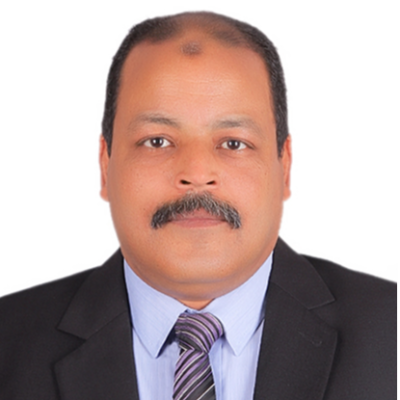
Mamdouh Tantawy -
Operations Director, Al-Zaafarana FPSO- Zafco field,
Gemsa Petroleum Company (Gempetco)
• Executing structural baseline surveys, targeted thickness gauging, and class notation reinstatement (DNV/ABS/BV) on legacy floating assets to cut quayside drydocking time and ensure structural safety prior to field life extension.
Gemsa Petroleum Company (Gempetco)
• Practical methodologies for retrofitting topside separation, water handling, and gas treatment skids on aging hulls to manage changing reservoir fluid profiles, high water cuts, and corrosive gas environments.
• Implementing Management of Change (MOC) protocols and risk-based inspection (RBI) regimes to safely transition aging FPSOs from late-life field operations into extended service or secondary deployment cycles without major CAPEX overruns.
Mamdouh Tantawy
Operations Director, Al-Zaafarana FPSO- Zafco fieldGemsa Petroleum Company (Gempetco)
10:50 am - 11:20 am
SGT
Speed Networking Session
11:10 am - 11:40 am
SGT
Morning Break & Refreshments
Digitalisation, AI & Remote Autonomous Operations
11:40 am - 12:10 pm
SGT
Cleaning Legacy Asset Data Architectures Before AI Deployment Across West African Mega-Hubs: Lessons from Egina & GTA
• Restructuring non-digitized paper drawings, unstructured PDF P&IDs, and legacy maintenance logs across aging Angolan, Nigerian, and Gulf of Guinea FPSOs into contextualized data baselines required for reliable AI-driven predictive maintenance
• Establishing common data governance, tag naming conventions, and open API standards between West African operators (e.g., TotalEnergies, Chevron, BP, Sonangol), regional EPCIC contractors, and global equipment OEMs to break down multi-vendor data silos
• Calculating direct financial returns, risk mitigation metrics, and avoided software implementation failures delivered by pre-AI data architecture cleanup on deepwater West African floating production hubs (such as TotalEnergies' Egina or BP's GTA FPSO)
12:10 pm - 12:40 pm
SGT
Industry Thought Leadership
12:40 pm - 1:10 pm
SGT
Project Spotlight | High-ROI Predictive Maintenance Deployment on Deepwater Hulls: Lessons from Petrobras’s Búzios Pre-Salt Mega-Hubs
• Linking high-frequency vibration, bearing temperature, and process telemetry with ML anomaly-detection algorithms across Petrobras Búzios pre-salt FPSO turbomachinery skids to predict failure windows weeks before threshold breaches occur
• Overcoming organizational resistance and regulatory hurdles to shift maintenance protocols from calendar-based overhauls to dynamic condition-based maintenance (CBM) on deepwater Latin American assets
• Measuring the concrete ROI of predictive maintenance deployments—including avoided production deferrals, optimized offshore technician logistics, and reduced spare parts inventory costs on Búzios mega-hubs like P-78
1:10 pm - 2:10 pm
SGT
Lunch & Networking Break
2:10 pm - 2:50 pm
SGT
Panel Discussion | Lowering Offshore POB Footprints Through Remote Onshore Control Centers: Operational Lessons from Equinor’s Bacalhau FPSO
• Designing distributed control systems (DCS), automated emergency shutdown logic, and safety instrumented systems (SIS) to allow partial and eventual total remote process control from onshore hubs on Equinor's Bacalhau mega-FPSO
• Securing high-bandwidth, ultra-low-latency redundant subsea fiber-optic and low-Earth-orbit (LEO) satellite links to maintain real-time, zero-packet-loss operational control across deepwater Santos Basin assets
• Navigating Brazilian safety management frameworks, offshore risk assessments, and crew reskilling programs to achieve regulatory sign-off for lean-manned deepwater floating facilities
Decarbonisation, Green Topsides & Secondary Asset Repurposing
2:50 pm - 3:20 pm
SGT
Project Spotlight | Integrating Low-Carbon Topsides and Electrification – The Johan Castberg FPSO
• Engineering energy efficiency systems into topsides under strict payload and deck space constraints
• Balancing power generation efficiency against total module weight and initial CAPEX
• Operational emissions tracking and verification results during early production phases
3:20 pm - 3:50 pm
EST
Afternoon Break & Refreshments
3:50 pm - 4:20 pm
SGT
Decarbonising Bumi Armada’s FPSO Assets Globally
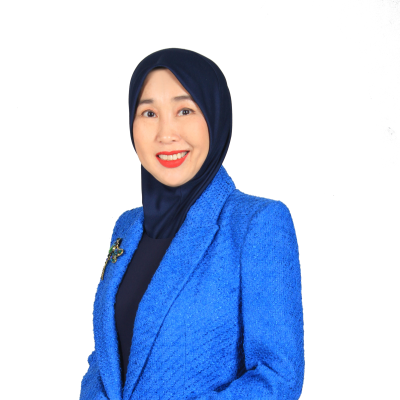
Sarimah Talib -
Vice President of Sustainability & External Relations,
Bumi Armada
• Evaluating the retrofit and installation of closed-flaring systems, waste-heat recovery units (WHRU), and high-efficiency turbomachinery on leased FPSOs to reduce operational carbon intensity without disrupting production uptime
• Overcoming physical deck real estate, weight limits, and center-of-gravity shifts when integrating carbon abatement hardware alongside core process modules on deepwater floating assets
• Structuring collaborative commercial frameworks and FEED design protocols between FPSO contractors and operators to share decarbonisation CAPEX, meet host-nation environmental standards, and future-proof assets against global carbon taxes
4:20 pm - 4:50 pm
SGT
Secondary Asset Repurposing in the North Sea: Engineering Floating CCS Hubs and Clean Energy Conversions
- Assessing structural reinforcement, cryogenic tank integration, dynamic riser fatigue, and marine stability when converting legacy UKCS and Norwegian FPSO hulls into floating 〖"CO" 〗_2 receiving, heating, and injection hubs
- Evaluating the commercial and technical feasibility of repurposing floating production topsides for offshore green hydrogen generation (desalination + electrolysis skids) or offshore gas-to-power with carbon capture across matured North Sea gas fields
- Navigating the London Protocol, EU Taxonomy guidelines, and regulatory frameworks governing transboundary 〖"CO" 〗_2 shipping, offloading handovers, and long-term storage liability transfers between European emitters, marine operators, and host governments
4:50 pm - 5:30 pm
SGT
Closing Leadership Panel | The 2030 Global FPSO Operating Model – Autonomous, Decarbonised, and Asset-Light
• Synthesizing key insights from digital, decarbonisation, and lifecycle extension strategies into a holistic operational plan
• Re-defining the future profile of offshore personnel, remote workflows, and digital operating standards
• Strategic priorities for operators and FPSO contractors over the next five years to preserve deepwater asset value