Media Centre | Your FPSO Guide
View Agenda Brochure - FPSO Asia Congress
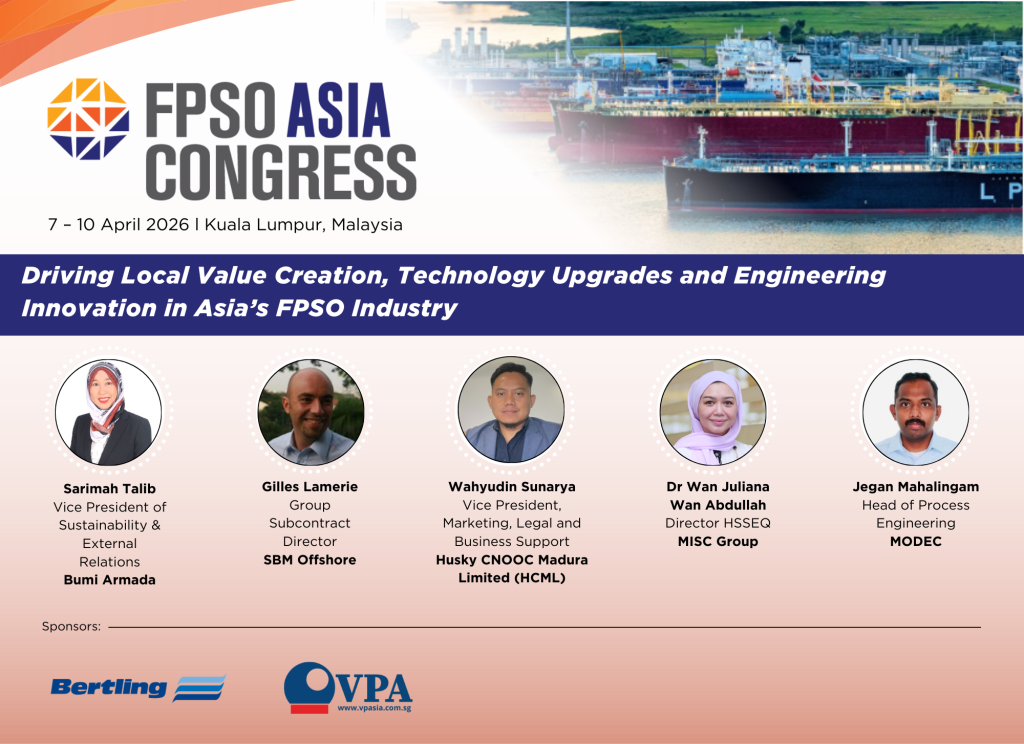
The FPSO Asia Congress takes place on 7 - 10 April 2026 in Kuala Lumpur, Malaysia!FPSO Asia Congress 2026 is the region’s definitive platform for project owners, contractors, and technology providers to align on execution strategies, innovation pathways, and commercial priorities. A ...
Past Content

Structural Integrity Maintenance, Hot Works and Cold Works
In an era of uncertainty, the one thing for sure is that neither corrosion nor ageing of structures will stop. The current crisis has brought us all into a world of uncertainty. However what is sure is that neither corrosion nor ageing of structures will stop. The global COVID-19 pandemic has increased maintenance backlog significantly, resulting in major congestion. The emphasis on remote working and reducing Personnel on Board (POB) is also an added challenge. At the same time, FPSO operators are trying to maximise production, and are seeking to avoid major disruptions. These market conditions and industry pressures at play have created an unprecedented challenge for the industry. In this article, we explore the importance of structural integrity maintenance for FPSOs, latest insights and developments in this space.

Staying Resilient - The Battle Ahead of Another Oil Rout
Ahead of the FPSO World Congress, the FPSO Network has put together this market report, which includes key lessons that the industry has learnt previously. It is now more important than ever to drive these innovative business models and cost-savings efforts during this unpredictable time, to boost favourable project economics and improve break-even levels for FPSO projects.
In this report, we cover:
- Aligning project conceptulisation & executive to reduce cost
- Harnessing value engineering to reduce CAPEX in FPSO projects
- Reducing OPEX through robust front-end planning
- Maximising FPSO efficiency in its later life

Fighting the Double Whammy!
The FPSO Network has put together this exclusive report which includes perspectives from several industry leaders on navigating the ripple effects from the volatile oil prices and the global COVID-19 pandemic. Our expert contributors share their insights into the new approaches FPSO leaders today must consider to counteract and de-risk their project strategies in this highly challenging time. In this report, we look 4 parts:
- Impact of COVID-19 and the oil price war on the FPSO industry
- The road ahead for potential and planned projects
- FPSO project investments risk appetite
- What's next?

How Digitalisation can drive Innovation in the FPSO Industry
We take a look at how digitalisation and next generation technologies can drive innovation in the FPSO industry. As it looks to the future, the industry is aware it needs to be strict on cost discipline yet improve efficiency and maintain safety standards, areas which digitalisation can help with.
The FPSO World Congress team spoke to industry leaders about their opinions on what needs to be done to achieve digital transformation and what technologies they would like to see in a new generation of FPSOs.

5 Digital Solutions for the FPSO Industry
The modern world sees industries adapting to an increasingly digitalised landscape. The FPSO industry is no different. As concerted efforts are made to improve project economics, digitalisation can help with evaluating and analysing data, improve cost savings, safety as well as technical and operational capabilities.
There are inevitable obstacles to this changing landscape, a lack of long term digital strategies, an unprepared workface to name a few but as with all things, it takes a bit of planning and determination to succeed. In this article we explore the digital solutions influencing the FPSO market.

The Economy of Autonomy: Boon or Bane for FPSOs?
The topic of low-manned or autonomous FPSOs has been gaining prominence in Europe of late. Several operators have already experimented with scaling back manning on their projects, with varying degrees of success.
We spoke to Bluewater Energy Services' Peter Burger for his insight into the pros and cons of low-manned FPSOs, and also covered pertinent topics such as:
- Safety concerns and cost-effectiveness
- Cyber attacks and how to prevent them
- The role of government in supporting FPSO autonomy
Featured Content

FPSO Asia Congress Attendee Overview
Learn more about the attendee profiles of industry leaders that will be attending FPSO Asia Congress. From FPSO Operators, to Oil & Gas Producers, and Solution Providers, these are the list of attendees that you will get to network with at the event.
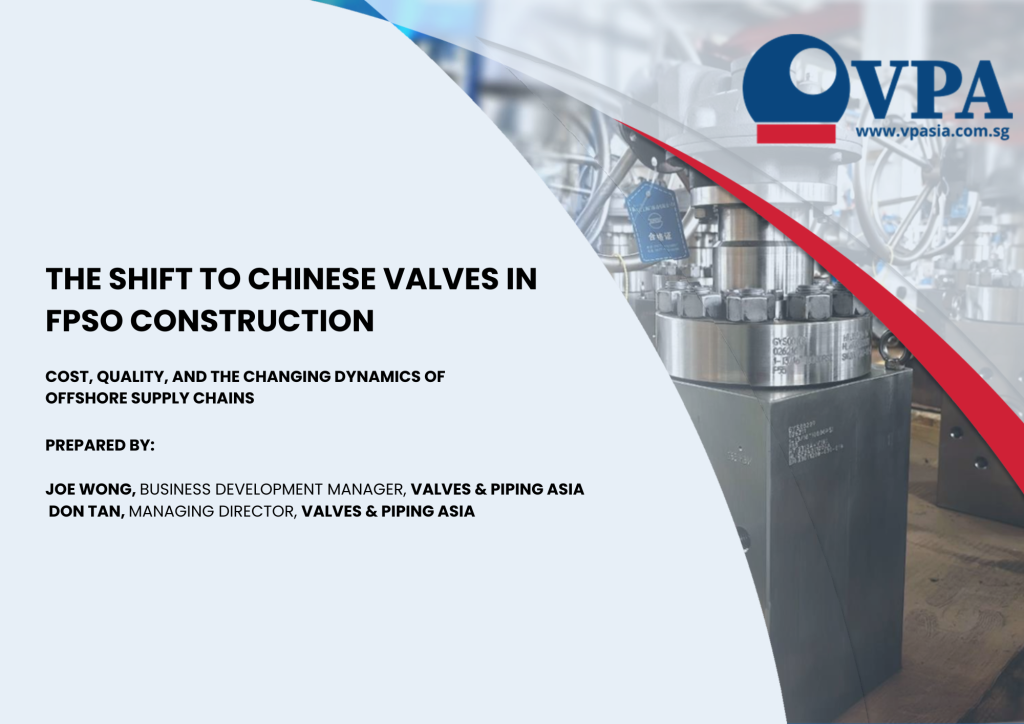
The Shift to Chinese Valves in FPSO Construction
The global market for floating production, storage and off-loading vessels (FPSOs) is undergoing significant structural change. As newbuilds and conversions proliferate, particularly in the Asia-Pacific region. The upstream supply chain is likewise evolving. One of the most notable trends is the growing adoption of valve packages manufactured in China instead of the traditional sourcing from European valve OEMs.
Download our whitepaper which details the shift towards Chinese Valves in FPSO Construction - produced by our sponsor Valves & Piping Asia Pte Ltd

Sustainable Solutions for FPSOs
The oil and gas industry has a critical role to play in reducing global greenhouse gas emissions, as a significant share stems from the upstream production of oil and gas. From a regulatory standpoint, several countries and regions, particularly in Europe and North America, are implementing policies aimed at curbing emissions from upstream operations. Driven by tightening emissions regulations and rising interest in alternative fuels across multiple industries, demand is increasing not only within traditional shipping but also in offshore segments, creating both opportunities and competition between sectors for access to low-carbon fuels

FPSO Supply Chain Strategies
Expenditure in offshore upstream projects has increased in recent years. However, 2023 closed with fewer approvals for FPSO projects than expected. High interest rates and full contractor backlogs proved hurdles for the market. Investment forecast for the next five years proves to be promising as FPSO growth is estimated to increase by 40% compared to the previous period.
Check out the report put together by Rystad Energy on FPSO Supply Chain Strategies.

Future Ready FPSO Projects
Carbon emissions from the FPSO sector are poised to surge amid a flurry of new deepwater developments, increasing concerns on the topic. Carbon dioxide (CO2) emissions are estimated to grow 27% by the end of the decade only in projects with that type of platform. FPSO decarbonization is receiving significant attention, with multiple available technologies to reduce field carbon footprint. Adopting these technologies will decrease the intensity from 19 barrels of oil equivalent (boe) to 17 boe produced by 2030. Check out our report to find out how FPSO projects can be future-ready designed to meet lower carbon emission objectives

2025 FPSO Market Outlook
With a slowdown in FPSO sanctioning activities last year, Rystad Energy projects a significant uptick over the current five-year cycle to near post-pandemic levels. This will be driven by both new developments and redevelopments – many of which were delayed due to volatile oil prices, a strained supply chain, challenging project financing in the energy transition context and the ongoing cost inflation.
Check out the report to learn more about the FPSO Market Outlook for 2025!

FPSO Contractor's Guidebook
FPSO Network has put together an essential easy-to-digest guidebook to some of the biggest FPSO contractors. Understand more about their strengths and benefits, operational track records, execution models, and get in touch with their unique insights on the potentials of the industry
In Partnership With:

QUESTIONS?
Contact us via email at enquiry@iqpc.com.sg.

©2026 IQPC. All rights reserved.